Five Must-See Champagne Houses & the Amazing Women Behind Them
I love exploring the Champagne region! From the first time I stepped off the train in Reims I was hooked. I mean how could I not be? It’s one of the handful of places in the world combining three of my favourite things: beautiful places packed with history; beautiful food and wine; and inspiring stories of trailblazing women.
It was to Reims where Joan of Arc led her march through France, pushing back their enemies and standing beside the French king as he was crowned at Reims Cathedral. Today, the lovely villages and sprawling vineyards of the Champagne region are home to some of the world’s most exquisite wines as well as iconic sites, hidden gems, and nods to inspiring women from Joan of Arc’s day to today.
Okay, let’s face it – the fine wine industry has historically been heavily male dominated. Even today, women are a minority across every aspect, especially in leading roles. And yet, it’s some seriously impressive women that we have to thank for making the champagne industry what it is today!
Here are five of those women and the champagne legacy they have helped to build. If you’re in the region, these champagne houses are each definitely worth a visit. If not, they’re definitely worth a toast!
Veuve Cliquot
If you like the sparkle of champagne, you can thank Madame Cliquot, the Grand Dame of Champagne.
In 1805, Barbe-Nicole Cliquot became a widow at just 27 years old. Her father-in-law planned to sell the family businesses but she convinced him to let her run her husband’s beloved champagne house. At a time when businesswomen were unheard-of, this young widow (‘veuve’ in French) not only became the first woman to lead a champagne business but ended up revolutionising the entire industry. Back then, champagne had a cloudy appearance, but Barbe-Nicole invented a special way to store the bottles upside down and turn them regularly so that the sediment could settle and be removed, leaving the crystal-clear drink we love today. She also created the first vintage champagne as well as the first blended rosé. All of these inventions are still widely used today. Madame Cliquot bucked long-held traditions and yet still built a reputation for luxury and elegance, with her new styles of champagne becoming the drink of choice of royalty across Europe. Later in life, she wrote these words in a letter to her grandchild: ‘The world is in perpetual motion, and we must invent the things of tomorrow…Act with audacity.’
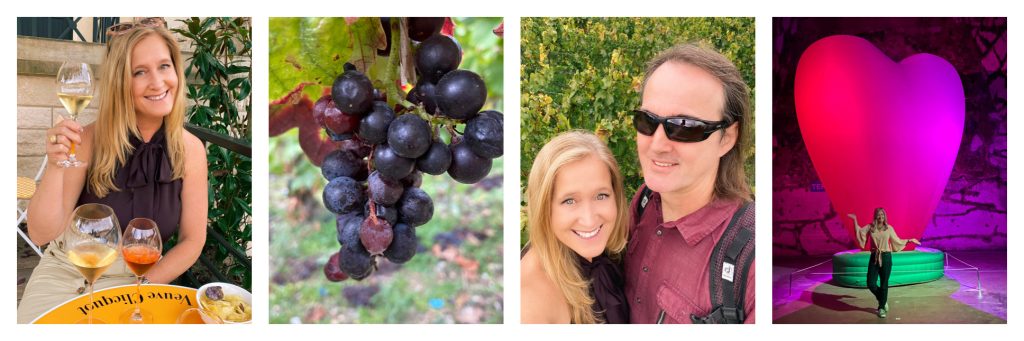
Visiting lovely Veuve Cliquot is easy as it’s just outside of Reims. They do have tours here, though taking one would require leaving their amazing garden terrace which is seriously hard to do. Honestly, just visiting the terrace itself is worth it! With the music playing, the yummy food to enjoy, and of course the delicious champagne flowing, it’s the best place to be on a sunny day.
Pommery
If you like crisp, dry champagne you can thank Louise Pommery.
In 1858, some 50 years after Madame Cliquot took the helm of Veuve Cliquot, the widow Madame Pommery became the owner of her late husband’s businesses. Her first act was to sell off all but the champagne house and stake her future there. She boldly purchased 20km of ancient Roman tunnels under the city of Reims. Everyone thought it was crazy, but her intuition was right – the tunnels could be turned into cellars where she could store thousands of bottles in a naturally temperature-controlled environment. Other houses soon copied the clever idea. And Louise’s bold steps didn’t stop there. Centuries after Joan of Arc chased out the English, Madame Pommery was determined to win them over as customers. Having studied in the UK, she saw the potential of the British market, but the champagne of the day was just too sweet. At the time, it was produced as a dessert wine usually consumed after a meal. So Madame Pommery decided to defy convention and cut way back on the sugar in her production, making it dry and crisp, to be enjoyed before, after, or even with food. The result? The first brut champagne, and an instant hit! Not only did the English love it, but a century later 85% of champagne consumed around the world is brut.
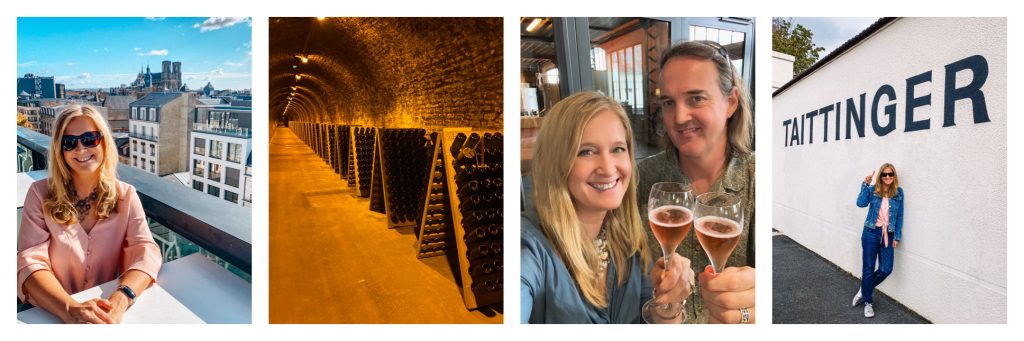
The impressive Maison Pommery is open for tours, tastings, and so much more. It’s Pommery that first cultivated the idea of champagne tourism, and it shows. The estate is massive and gorgeous with a fantastic restaurant and tasting room. But the true showpiece is the labyrinth of underground cellars which not only hold thousands of bottles but also room after room of impressive art displays. And it’s all walking distance from the Reims city centre!
Bollinger
While Cliquot took champagne to royalty, and Pommery took it to the UK, it’s Bollinger that took it to everyday people everywhere thanks to Lily Bollinger.
Lily inherited the maison from her husband when he died in 1941. With war in full swing, times were challenging in occupied France but Lily leaned in and persevered. She personally oversaw every aspect of production and knew every staff member by name. She would often be seen on her bicycle riding through the vineyards and speaking to the locals — truly a woman of the people. For the next 30 years Lily’s personal touch and marketing brilliance led Bollinger from success to success, including introducing champagne to the US market through her own personal tour in the 50s, and connecting it with an icon in the 60s when Bollinger became James Bond’s tipple of choice on the silver screen. She also made ‘RD’ champagne famous – this champagne is aged for years on its lees and most maisons save it for their family and very best customers, but Lily sold it to the public. After all, good champagne belongs to everyone! Her famous quote says it all: ‘I drink champagne when I’m happy and when I’m sad. Sometimes I drink it when I’m alone. When I have company, I consider it obligatory. I sip it when I’m not hungry and drink it when I am. Otherwise I never touch it, unless I’m thirsty.’
Maison Bollinger is surrounded by rolling vineyards in the gorgeous Grand Cru commune of Ay, the heart of the champagne region. Their tours are limited and definitely need to be booked in advance, but are both insightful and luxurious. Joining the free Bollinger 1829 club provides access to special events at the house throughout the year to make things feel even more exclusive, even though they’re actually available to anyone who signs up.
Tattinger
If sustainability is your passion, be thankful for industry leaders like Vitalie Tattinger.
Tattinger is one of the oldest champagne houses but it hasn’t always been family-owned. That changed (again) in 2007 when Vitalie helped her father and brother to buy it back. For the next 12 years she worked on her father’s management team, learning from him and continuing to build the Tattinger brand name; and in 2019 when he retired he named Vitalie to succeed him as President and CEO. The next few years through Covid were difficult, and she saw the need to adapt to survive. She also leaned into their values as a family business to support their employees and community. Afterwards, as more and more opportunities arose, she continued to give first priority to the partners that stayed with them through the pandemic. These themes of family, community and sustainability continue to resonate through her leadership approach today, and she’s worked with her team to take some bold steps to adapt to the changing environment and a changing society to create champagne for future generations. She’s launched a community engagement programme, philanthropic initiatives and a priority focus on environmental practices to ensure their ecosystem and family name are preserved. Sustainability is the new luxury!
Maison Tattinger is in Reims, built on the site of a 13th century abbey and listed UNESCO World Heritage cellars. Their newly opened visitor centre and cellar tours are fantastic, not to mention the champagne! Alternatively, if you can’t get to the Champagne region, you can visit Tattinger in Kent! Vitalie is also the President of the lovely Domaine Evremond, showcasing sparkling wines from the first vines planted by a champagne house in England.
G Tribaut
If low calorie champagne is your thing you can thank growers like Valerie Tribaut.
The big champagne maisons are super impressive but there’s something special about the smaller houses with multiple generations working side by side to oversee every aspect from grape to glass. Champagne G Tribaut is exactly that. Valerie, the co-owner and chief winemaker of Tribaut, is the 3rd generation of the Tribaut family to work these vines. It’s rare to see a woman at the helm of a champagne house and even rarer to see one as the cellar master. With Valerie you’ll find both!
I first learned about G Tribaut through Finest Fizz, a UK champagne seller specialising in high quality, small batch producers from across the champagne region. At their request, Valerie created a rosé champagne for Fizz customers that has all the flavour with no added sugar to keep the calories and headaches to a minimum. How fab is that?!? The Rosé Zero Dosage has less than 0.1 grams of sugar per 100ml (compared to 6 grams in typical dry champagne and more than 50 grams in sweet champagne). Valerie’s creation is such a great example of honouring traditional methods while adapting for an evolving clientele.
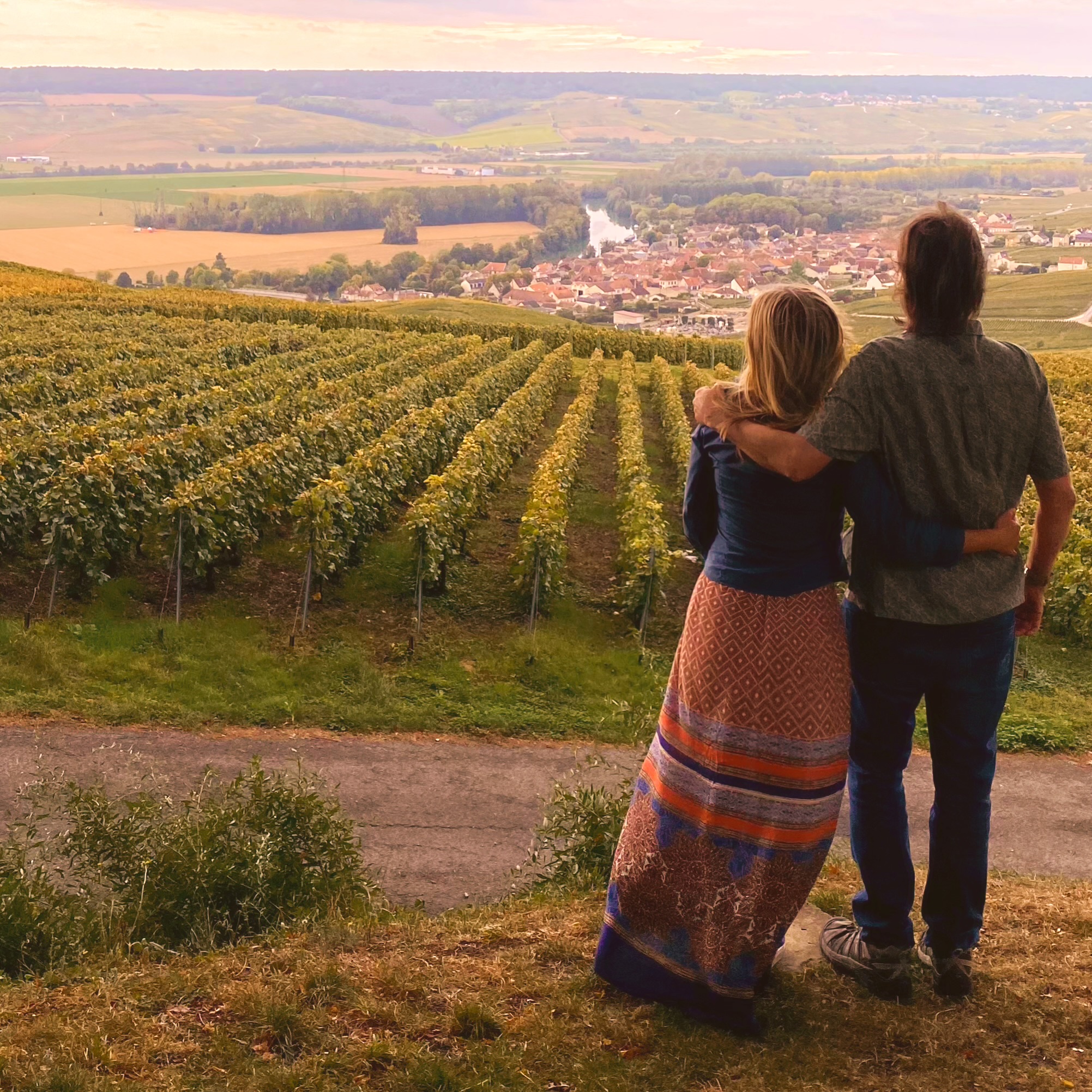
Maison G Tribaut is located in the lovely commune of Hautvillers, using the very same soil where Dom Perignon planted his vines and ‘discovered’ champagne centuries earlier. A visit to their tasting room is worth it just for the sweeping views alone, which stretch across the valley all the way to Epernay. Of course, the champagnes are pretty amazing as well!
Conclusion
I hope you’ve enjoyed this tour through the Champagne region and their amazing women of history and today. I also hope you’ll get the chance to visit yourself!!
As these stories show, family connections have historically been key for women to have the opportunity to shine in the fine wine industry. But things are changing! Thanks to women like these who have paved the way for others, women are increasingly prominent at all levels as growers, cellar masters, managing directors and owners. Cheers to the trailblazers and the many following in their footsteps!