Historic American Sites in London
As an American who has lived most of my adult life in London, I love finding spots in London that celebrate American history and the ‘special relationship’ between these two amazing countries.
Here are ten of my favourite spots with historic American ties:
Mayflower pub and monument
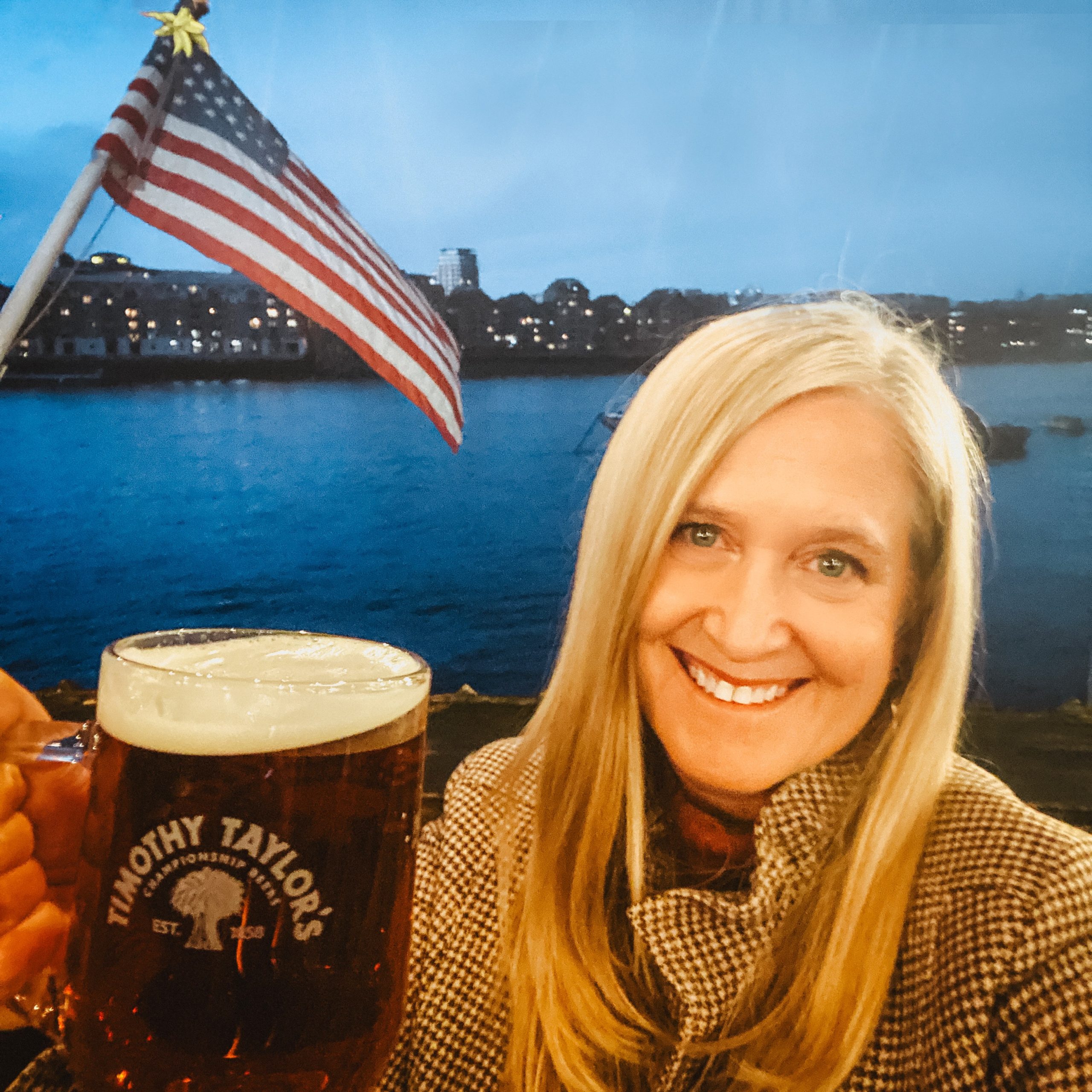
The first site on my list is in Rotherhithe at the oldest pub on the Thames, the Mayflower. In July 1620 the Mayflower ship moored just below the pub and took aboard 65 men and women as they started the journey to America in search of religious freedom. Today, an American flag flies from the balcony, and if you ask at the bar there’s a Mayflower Descendants book you can see – in fact, if you can prove a family connection to the original voyage you can sign it yourself! The pub has been beautifully renovated with a lovely riverside terrace to enjoy in the summer and a roaring fire inside in the winter, plus a candlelit restaurant upstairs.
Just around the corner from the pub is St Mary’s Church, where you can find a plaque and memorial in honour of the Mayflower’s captain Christopher Jones who returned to London after the voyage to America and spending the first winter there with the settlers and the Native Americans who helped them to survive and found Plymouth.
Painted Hall and Pocahontas
Growing up, Pocahontas was one of my fave historic figures. As an adult, I’ve learned that her story is far from a romantic fairytale, and I’m even more impressed by this strong young woman who overcame so much and is undoubtedly braver, smarter and way more interesting than the glossy children’s fables about her.
One true part to her story is that she arrived in London in 1616 with her husband John Rolfe, their baby Thomas, and a delegation from the Virginia settlement in Jamestown. Their goal: to promote the new world. While here, she became a local celebrity and was even given an audience with the King and Queen. Sadly, her trip to the UK is the end of her story as she fell ill and died before being able to return home with her family.
Today Pocahontas is memorialised several places, and my personal fave is in the Painted Hall in Greenwich. The ceiling there – Britain’s Sistine Chapel – is an elaborate celebration of Britain’s amazingness, with Queen Anne looking out to the four corners of the world – Europe, Africa, Asia, and the Americas. And the Americas is represented by none other than the first Native American to arrive in London – the amazing Pocahontas!
Enderby Wharf and revolutionary ties
If you’re looking for a revolutionary spot, consider Enderby Wharf in Greenwich. Today Enderby House is a lovely pub with a terrace that’s the perfect spot for sundowners with a spot of history thrown in.
In 1773 it was from here that one of Enderby’s ships set sail for Boston carrying 342 cases of tea – the Boston Tea Party tea that caused the spark starting the American Revolutionary War. With the trade route cut off by the War, Enderby started sending his ships to the uncharted whaling grounds of the Pacific, voyages you can read about today in Melville’s masterpiece Moby Dick. And as a bonus fun fact: Melville’s grandfather was one of the guys throwing tea into the Boston Harbour!
A century later it was also from here that global communications were revolutionised when the first transatlantic telegraph cables (made by the Enderby company) were loaded onto ships (apparently using the equipment still standing here today), and ultimately enabling Queen Victoria to send the very first transatlantic telegram to President Buchannan. Boom! The internet was born.
Benjamin Franklin House
So here’s a fun fact: the only surviving home of the American revolutionary hero Benjamin Franklin is located in London! He lived here for 16 years as a representative of the Pennsylvania Assembly at a key time in the history of America.
Franklin actually spent the vast majority of his life as a British loyalist, and he spent much of his time in London working to strengthen the ties between the UK and the American colonies. He successfully convinced Parliament to repeal the dreaded Stamp Act, and became an influential diplomat finding common ground where he could. It was only as a last resort that he became a fierce supporter of the revolution, and even afterwards had hopes for a long-term reconciliation.
Today you can tour his home and learn about his life and his contributions to both countries, not to mention his many discoveries as a scientist, inventor and student of life who was constantly working on his own self-improvement. I wonder what he’d think of our world today!
Phillis Wheatley blue plaque
One of my fave blue plaques in London can be found on Aldgate Stret and is not celebrating a Brit but an American — Phillis Wheatley, who arrived in London in June 1773. Phillis was born in Africa but sold into slavery at the age of 8 and barely survived the crossing to America. Too weak for manual labour, she was sold as a household servant to the Wheatleys in Boston who gave her the name Phillis after the ship she arrived on. Phillis soon demonstrated her intelligence and knack for mastering multiple languages, and she began to write poetry. At the age of 20 she was sent to London so that her poems could be published – and published she was by a publisher located here on Aldgate Street. It was the first English publication of African-American work, and even more impressive given that she was still enslaved.
Phyllis finally gained her freedom, continued to write, and her poems were highly influential in the abolitionist movement in London and around the world.
Two Temple Place and the first female MP
The gorgeous building at Two Temple Place is here thanks to the eccentric American gazillionaire, William Waldorf Astor, who turned his New York home into the Waldorf Astoria Hotel then moved to London, became a Brit, and had this elaborate place built as his personal office – a little mini-palace to compliment the actual palace he bought in the countryside. I mean, of course!
But for me, one of the best things about William Waldorf Astor coming to the UK is that he had enough influence that he was given a Peerage in the House of Lords. That led to his son getting involved in politics, and then his daughter-in-law, Nancy Astor, who was an American herself before also gaining British citizenship. Nancy went on to become the very first female to take a seat in Parliament! How cool is that?!?
Today the gorgeous Two Temple Place is open to the public at a variety of times throughout the year, including days that are completely free. Be sure to check out their many great exhibitions!
Selfridges, shopping and its roof terrace
I love that Selfridges, one of Britain’s iconic department stores, was founded by an American! Harry Gordon Selfridge had a successful career at Marshall Fields in Chicago where he worked his way up from stockboy to partner. Then on a trip to London, he saw the gap in the market for department stores here, and launched Selfridges.
Harry prioritised the customer experience and turned shopping into a destination event for entertainment and not just necessity. His motto: the now famous quote ‘the customer is always right’. The concept was a hit, and Selfridges continues to thrive today as a landmark destination.
I love just as much that Selfridges stood in solidarity with the Suffragettes and pledged to support their movements. They also created in-store restaurants where women could dine unchaperoned. Today their roof terrace restaurant and bar is one of my fave spots on a sunny day!
US Presidential statues in London
Six US presidents have statues in London:
- In Trafalgar Square, you can find a bronze of the first American President, George Washington. Fun fact: George is standing on American soil brought over just for him!
- In Parliament Square, you can find Abraham Lincoln, arguably the most admired US president who abolished slavery and reunited the US states after the Civil War. I love that he stands there alongside other global champions of the oppressed like Nelson Mandela, Ghandi and Millicent Fawcett. It was unveiled in 1920 to celebrate 100 years of peace between the US and the UK.
- In Grosvenor Square (the former site of the US Embassy), you can find a statue of Franklin D Roosevelt, which was unveiled by his wife Eleanor Roosevelt. You can also find a sculpture of FDR and Churchill sitting on a bench together on New Bond Street. There’s no doubt that the ‘special relationship’ between these two was a defining moment in the history of both countries.
- Also in Grosvenor Square, you can find statues of two other prominent American presidents who continued the special relationship — Dwight D Eisenhower and Ronald Reagan.
- Finally there’s a bust of John F Kennedy at the International Students House opposite Regent’s Park, which was funded by subscriptions from more than 50,000 readers of the UK’s Sunday Telegraph newspaper in amounts limited to £1 each. How touching is that?!?
Grosvenor Square and Juliette Gordon Low
While Harry Gordon Selfridge was importing the American shopping tradition to the UK, Juliette Gordon Low was exporting the British girl empowerment movement to the US!
Juliette was an American who married a Brit and moved to the UK in her 20s. She spent the rest of her life travelling between her homes in the two countries, including her London home on the corner of Grosvenor Square (the same square which would later become the home of the American Embassy). It was while living here that she met Sir Robert Baden-Powell, founder of the Boy Scouts and his sister Agnes Baden-Powell, head of the Girl Guides. Juliette was inspired to get involved and formed a Girl Guide troop near her home in Scotland, and two more near her home in London.
On Juliette’s next trip to the US she called her cousin and they formed the first two American Girl Guides troops. She went on to rename it Girl Scouts, create a national headquarters and spread the movement across the US, funding most of the expenses herself. Today, Girl Scouts USA empowers more than 1 million girls annually!
Texas Embassy
As a proud Texan, I couldn’t have a list of historic American sites without mentioning the Texas Embassy! The only US state to start as its own country was the Republic of Texas, and it had an embassy in London at 3 St James Street, just down the street from St James’ Palace which was the main royal court at the time. The embassy remained there until (despite royal support for the Republic), Texas decided to join the USA. Today there’s a plaque there to commemorate the historic site.
But I think my fave fact about this site is that their landlords were their downstairs neighbours, the Berry Brothers, Britain’s oldest wine and spirits merchant which is still there today! Berry Brothers was one of the oldest business founded by a woman, the widow Bourne, whose descendants expanded her shop to supply fashionable coffee houses, then the Royal court, and later the world. And the American ties are strong — they not only hosted the Texas Embassy while it was a Republic, but also supplied wine to the Titanic and smuggled Scotch to America during the prohibition. Today they have a Texas Legislation Bourbon for sale if you’re interested!
Iconic American History Sites in London
I hope you’ve enjoyed this list of fun spots in London with historic American ties, and are inspired to explore them yourself!